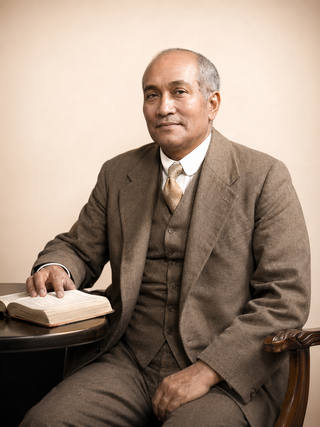
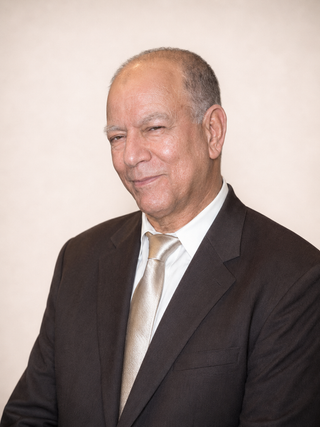
Subhi Taha
Dr. Eng. Subhi Taha was a Syrian Quranic publisher, inventor, and the founder of Dar Almarifa, best known internationally as the originator and patent-holder of the time-and-color-coded Tajweed Quran, a publication system that has facilitated correct recitation for millions of Muslims around the world. Born in 1941 in the Douma district of Damascus, Syria, he combined an engineering background with a lifelong devotion to the service of the Qur'an, founding Dar Almarifa for Publishing, Distribution and Artistic Production in Damascus in 1986. The publishing house initially produced 240 titles in religion and heritage before specializing, between 1991 and 1994, in the patented Tajweed Quran — a mushaf that uses three color categories (red for elongations, green for nasalization, blue for emphasis and qalqalah, with grey for silent letters) to make twenty-eight tajwid rules visible at a glance.
In 1999, the Islamic Research Academy at al-Azhar al-Sharif formally adopted the Tajweed Quran issued by Dar Almarifa, recommending its color-coding system as a unique standard. Taha and his brother, Eng. Adnan Taha, jointly received patents for Al-Munir Quran, an interactive recitation device launched in 2002, and Subhi Taha alone received a separate patent in 2006 for the DPQ (Digital Pocket Quran) with Ottoman script. He was awarded a PhD in creativity from the International Federation in France in 2006, the Ras Al Khaimah Holy Quran Award in the United Arab Emirates in 2008, and was named a Global Inventor by the American Arab Board in 2013. Under his direction, Dar Almarifa distributed millions of copies of the Tajweed Quran in eight languages (English, French, Russian, German, Spanish, Turkish, Chinese, Urdu, Persian) across more than forty branches and distributors worldwide.
Beyond the Tajweed Quran project, Taha published his Memoirs in 2017 and his final and most ambitious work, Muhammad (peace be upon him): A New and Systematic Approach of the Prophet's Sunnah, in 2018 — released in Arabic, English, and Urdu, with French, German, Russian, and Turkish translations subsequently underway. He also produced over 600 episodes of Quranic television programming, including Let's Learn Recitation, which won the Ninth Gulf Festival for TV Programs award. He died on 12 February 2022 / 11 Rajab 1443; his funeral was held in Egypt, with mourning councils convened in Damascus, Cairo, Beirut, Riyadh, and Istanbul.
More by Subhi Taha →


 Abdullah Yusuf AliAbdullah Yusuf Ali was an Indian-born British civil servant, scholar, and translator whose The Holy Qur'an: Text, Translation and Commentary remains, almost a century after its first publication,...View author →, Subhi Taha
 Subhi TahaDr. Eng. Subhi Taha was a Syrian Quranic publisher, inventor, and the founder of Dar Almarifa, best known internationally as the originator and patent-holder of the time-and-color-coded Tajweed...View author →
 Dar Al-MarifahDar Al-Maarifah is a distinguished publishing house founded in Damascus in 1986 by Eng. Subhi Taha. It has published large-scale Quranic editions such as the “Tajweed Qur’an” in multiple languages and boasts a global...View publisher →